
New Franklin schools superintendent pushed DEI, neo-Marxist pedagogy
Dr. Nakia Hardy "implemented district-wide professional development on understanding implicit bias, equitable practices, and culturally responsive pedagogy" while at Durham Public Schools
Is electing Republicans at a local level actually effective at preventing your children from being educated according to “a worldview that demands people, especially young students, to judge others based on their race, sex, or other factors and attack true diversity of thought, stifle opportunity, and stoke division?”
That’s how Diversity, Equity, and Inclusion was characterized in a bill supported by Franklin County’s state representatives in both the House and Senate, which would have restricted such “discriminatory practices” and “divisive concepts” from public schools. (SB 227 was vetoed by Gov. Josh Stein; the veto has been overridden in the Senate but not the House.)
Franklin County also favored President Donald Trump in the 2024 election by 13.5 points, a candidate who made it a Day One priority to begin issuing anti-DEI executive orders such as “Ending Radical And Wasteful Government DEI Programs And Preferencing“ and “Ending Illegal Discrimination and Restoring Merit-Based Opportunity,” as well as Council of State candidates Luke Farley and Dave Boliek who ended DEI in their respective agencies upon taking office this year.
But yet, when the rubber meets the road, the Franklin County Board of Education (on which the Franklin GOP claims a majority) has selected a new superintendent with a history of using her authority to push not only DEI but also the even more radical “critical” pedagogy onto teachers under her authority while at Durham Public Schools.
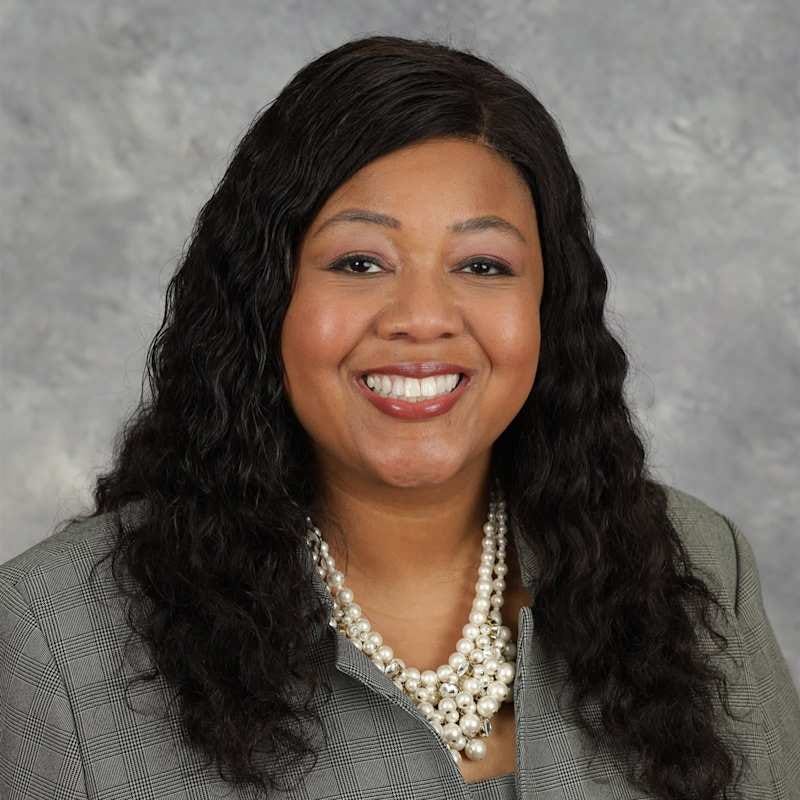
Dr. Nakia Hardy
On December 5, it was announced that Dr. Nakia Hardy had been chosen to lead Franklin County Schools out of a field of twenty-nine candidates for her “deep experience, proven leadership, and steadfast commitment to students and staff.”
Although her most recent position is superintendent of Lexington City Schools, Hardy has held administrative positions ranging from assistant principal to deputy superintendent at Guilford County Schools, Baltimore City Public Schools, Rockingham County Schools, Alamance-Burlington School System, and Durham Public Schools.
Hardy’s education includes a bachelor’s degree in chemistry from Appalachian State University, as well as a master’s degree in school administration and a doctorate in educational leadership from UNC-Chapel Hill.
DEI and Neo-Marxist Theory
Hardy appears to have been most open about her adherence to DEI as well as other leftist principles, policy, and pedagogy while Deputy Superintendent at Durham Public Schools beginning in 2018.
In 2020, Hardy was interviewed in a podcast episode titled “How Leaders Can Build a District Culture of Inclusion and Impact,” in which one of her highlighted accomplishments at DPS was described as “implement[ing] district-wide professional development on understanding implicit bias, equitable practices, and culturally responsive pedagogy.”
Culturally Responsive Pedagogy or Culturally Responsive Teaching is a Critical Race Theory-adjacent racially-focused philosophy which includes “attempt[ing] to develop [students’] cultural competence” and “increas[ing] their sociopolitical or critical consciousness,” according to leftist activist Gloria Ladson-Billings who defined the term.
Critical Consciousness, in turn, refers to the “oppressed” not only adopting the Marxist oppressed-oppressor dichotomy, but also engaging in the “praxis” of neo-Marxist revolution.


In addition to taking credit for advancing these particularly controversial ideas, Hardy’s language in the interview was replete with leftist language such as making reference to “systemic racism” and describing the 2015 Baltimore riots as the “Freddie Gray uprising,” which took place while she was an executive director at Baltimore City Schools.
In response to a question on whether she “maintained equity focus in terms of your district in particular,” Hardy described an “inclusive” approach to “equity” in Durham by including religion, race, sexuality, gender, and disabilities in her decisions.
Hardy was also part of an “antiracist” session on “literacy for Black and brown students” in 2021, and wrote an article in 2019 titled “Curriculum Is Misunderstood. Let’s Overcome That, in Service of Equity.”
Although some material from Hardy’s time at DPS appears to have been taken down or deleted from the district’s website, one newsletter she authored is still existent online in which she referenced how the district’s “commitment to equity is woven throughout our Strategic Plan” while recommending a book by DEI scholars Amanda E. Lewis and John B. Diamond.
“Alignment”
In response to an inquiry as to whether the district was aware of Hardy’s history of pushing these “divisive concepts” and whether this choice was consistent with the will of the citizenry, FCS cited the board’s satisfaction with her “alignment with the district’s mission and strategic priorities” as well as her “qualifications” and “leadership experience:”
Franklin County Schools conducted a comprehensive, thoughtful, and confidential superintendent search process. The Board of Education selected Dr. Hardy based on her qualifications, leadership experience, and alignment with the district’s mission and strategic priorities. The district remains focused on student achievement and compliance with all applicable federal and state laws.
Neither Hardy nor board chair Meghan Jordan responded directly to a similar opportunity for comment.